
Among Friends: Patronage and Pecadillos in
the Letters of Early Republican Politicians
Curated by Sarah Jackson
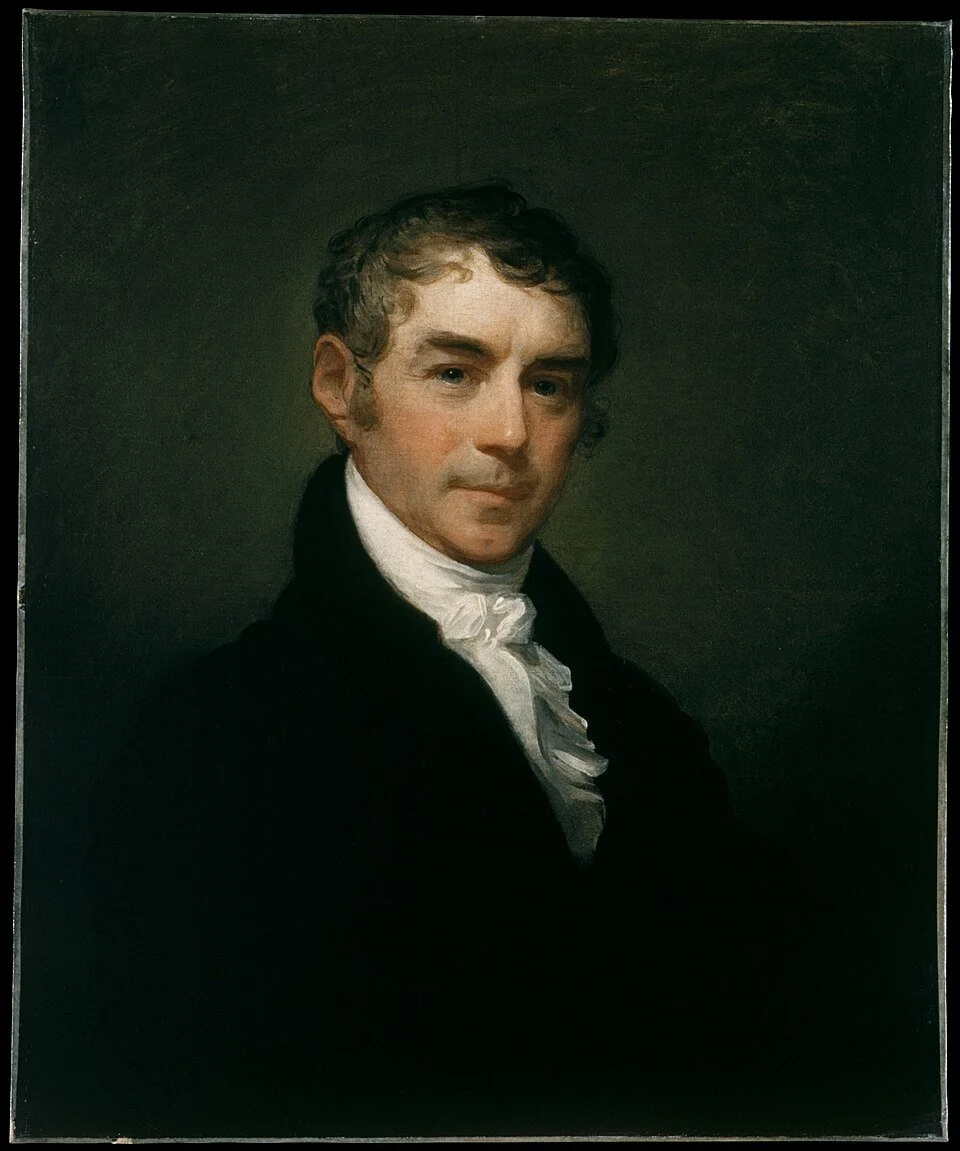
Serving as governor, congressman, and Secretary of War, William Eustis, born in Boston in 1753 in relative obscurity, became deeply embedded in an expansive social and political network—dining with Jefferson and corresponding extensively with figures like Madison, Adams, and Monroe. In these circles, influence was built as much through personal connection as through public office. The sampling of letters exhibited here is a tiny fraction of Eustis’s lifetime correspondence, but it is full of interactions that blur the boundaries between public duty and private interest. Eustis, like his contemporaries, operated within a system where allegiances shift, reputations must be managed, and outcomes rarely align cleanly with stated ideals.
Recommendations for positions, requests for discretion, and appeals for assistance with land, business, or appointments all point to a system that relied as much on reputation and reciprocity as on formal political procedural rules. Within this context, the politics we are living through today begin to look less like a modern breakdown and more like a mere continuation of practices that have shaped American political life since the eighteenth century.
Today, it is easy to watch the messy maneuvers of politics unfold across our TVs and phones and feel as though the system has never been more chaotic. Yet the letters featured in this exhibit suggest otherwise. A closer look at the correspondence sent to and from William Eustis in the years between 1803 and 1823 reveals that our political life has long operated unofficially through favors, relationships, and, at times, strategic silence.
Behind the Seal
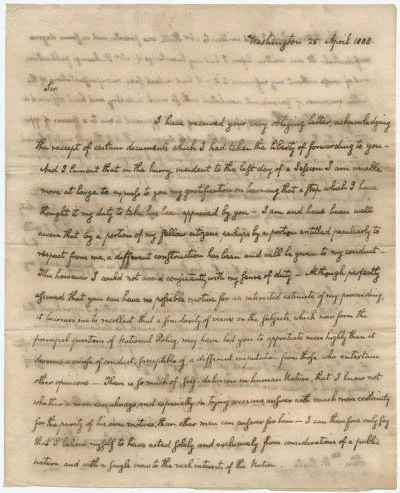
In 1808, John Quincy Adams wrote to thank Eustis for supporting his break with the Federalist Party, confiding his frustrations with public criticism and trusting Eustis to understand the motives behind his decision.

Southworth & Hawes, John Quincy Adams. Daguerreotype (copy of an 1843 original by Philip Haas), circa 1850. The Metropolitan Museum of Art. Wikimedia Commons. Public Domain.
“...I am and have been well aware that by a portion of my fellow citizens, perhaps by a portion entitled peculiarly to respect from me, a different construction has been and will be given to my conduct...”
John Quincy Adams, Letter from John Quincy Adams to William Eustis, 25 April 1808. Manuscript. 25 April 1808. Letters to William and Caroline Eustis, Massachusetts Historical Society.
In the wake of the Louisiana Purchase, in November of 1803, James Sullivan wrote to Eustis recommending General William Hull for a gubernatorial appointment, framing both his qualifications and his New England background as assets to the growing Louisiana territory. This was not the only letter in this collection to ask for favors. Others asked for introductions, keeping an eye on their friend’s son, or a property price assessment.
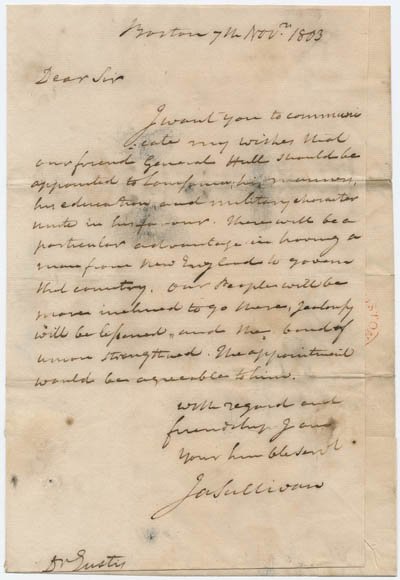
James Sullivan, Letter from James Sullivan to William Eustis, 7 November 1803. Manuscript. 7 November 1803. Letters to William and Caroline Eustis, Massachusetts Historical Society.
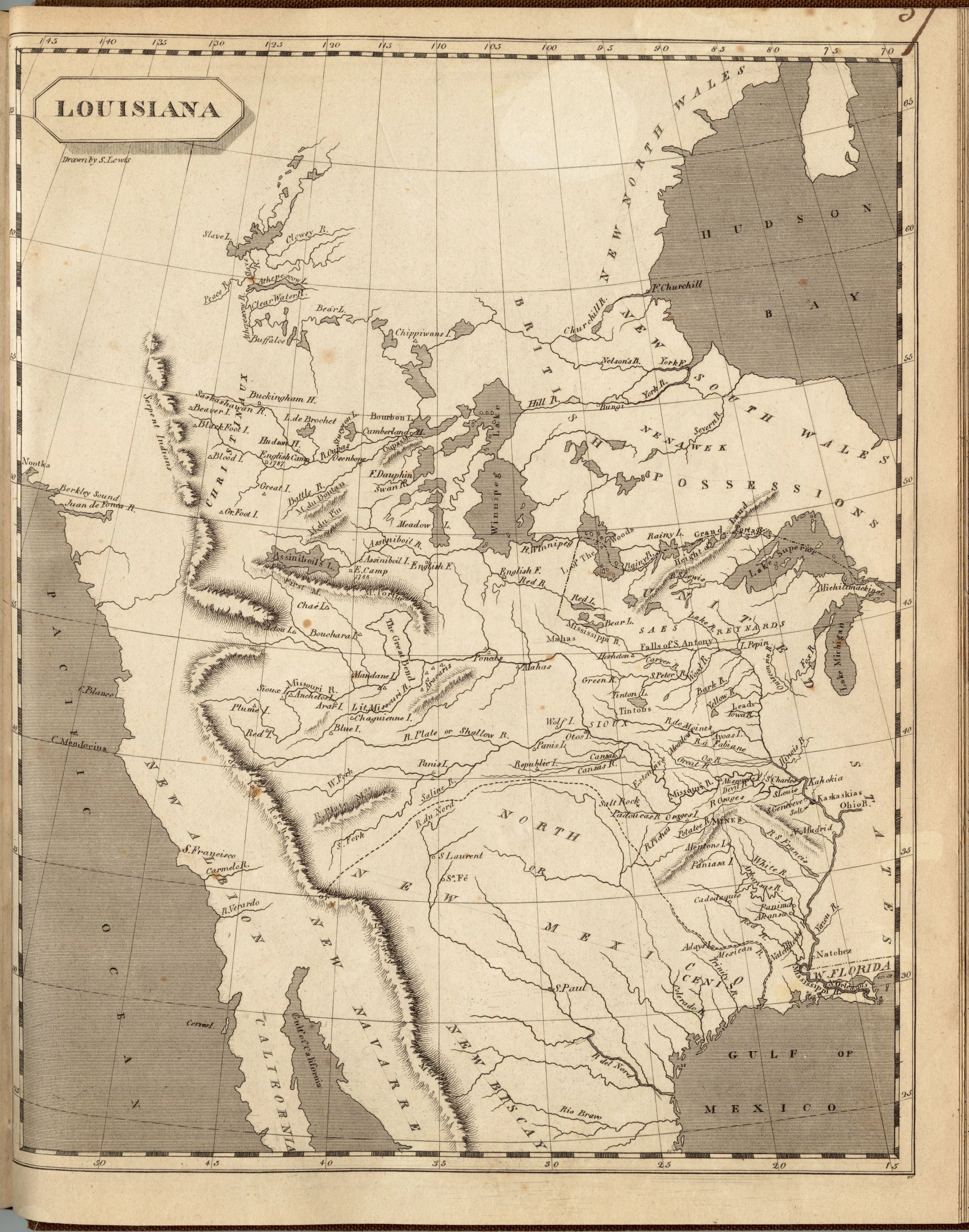
Samuel Lewis, Louisiana. Map. Philadelphia: John Conrad & Co., 1804. Digital Commonwealth. (accessed June 30, 2026). Public Domain.
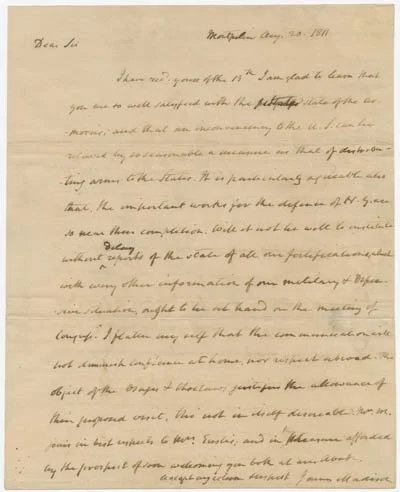
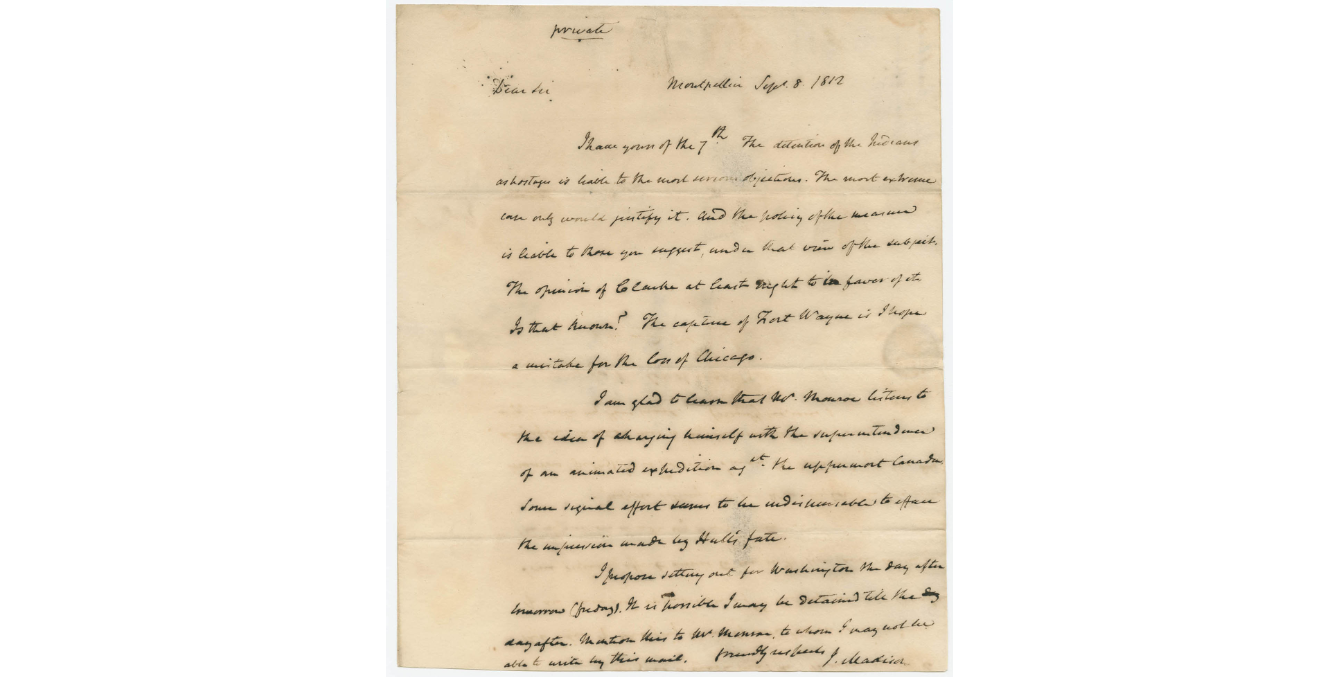
The collection also captures moments when those relationships were tested. In correspondence sent in September 1812, during the early months of the War of 1812, James Madison responded to William Eustis about reports from the western frontier. In a letter marked “private” he expressed strong reservations about Eustis’s proposal to detain Native Americans as hostages, stating that only the most extreme circumstances could justify such a measure. Madison also questioned reports that Fort Wayne had fallen, hoping they instead referred to the earlier loss of Chicago, and emphasized the need for a decisive military success to restore public confidence after General William Hull's surrender at Detroit.
“... our friend General Hull should be appointed to Louisiana; his manners, his education, and military character unite in his favour. There will be a particular advantage in having a man from New England to govern
that community.”
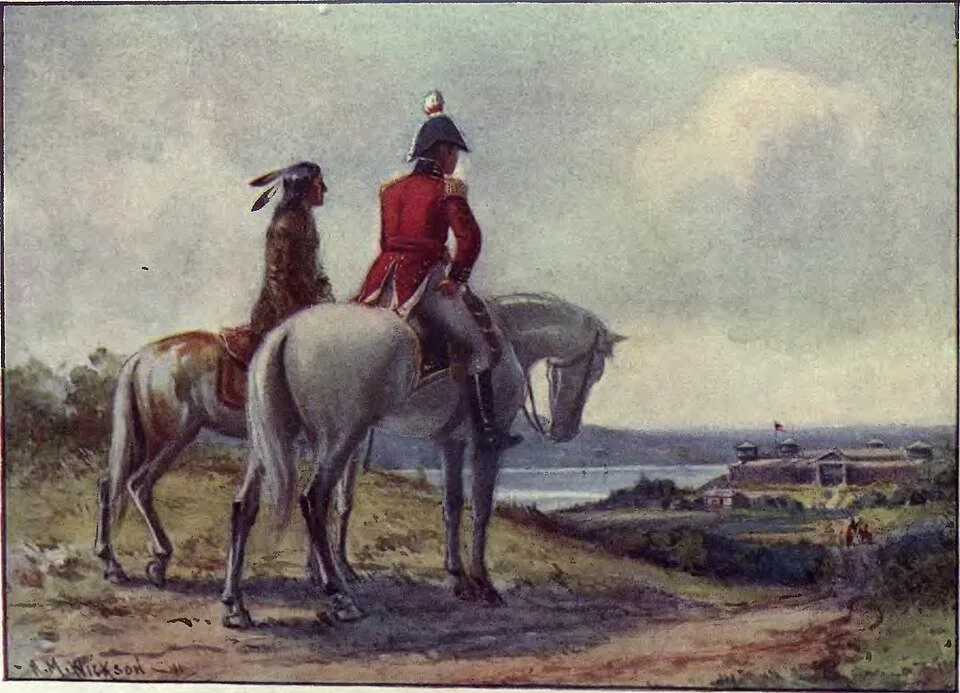
Alfred Morton Wickson, Tecumseh and Brock at the Surrender of Detroit. Painting, published in The Story of Tecumseh by Norman S. Gurd, 1912. Wikimedia Commons. Public Domain.
James Madison, Letter from James Madison to William Eustis, 8 September 1812. Manuscript. 8 September 1812. Letters to William and Caroline Eustis, Massachusetts Historical Society.
“Some signal effort seems to be indispensable to efface the impression made by Hull’s fate. ”
While the details of these letters differ, they point to a consistent reality: American politics has long operated through networks of influence, negotiation, and personal connection. The difference is not that these practices exist today, but that they are now conducted in public view. Where a folded and sealed letter once preserved a measure of discretion, modern technology broadcasts similar exchanges instantly, making visible dynamics that have shaped political life since the nation's earliest years.
Click to read each letter:
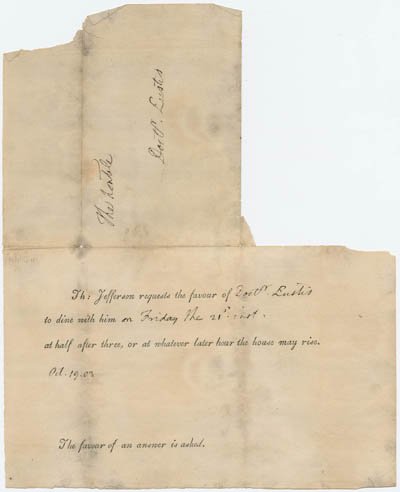
Dinner invitation from Thomas Jefferson to William Eustis, 19 October 1803
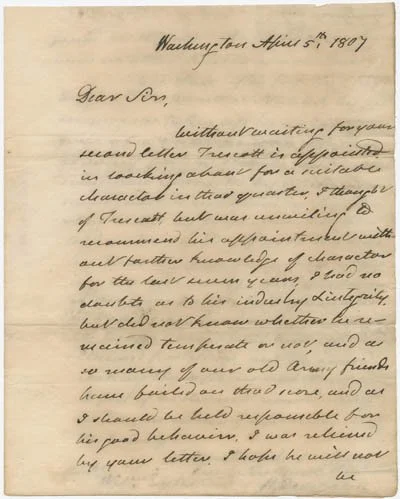
Letter from Henry Dearborn to William Eustis, 5 April 1807
Letter from James Madison to William Eustis, 20 August 1811
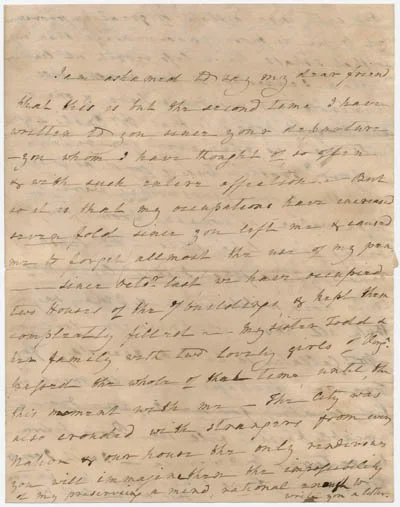
Letter from Dolley Madison to Caroline Langdon Eustis [Mrs. William], 17 May 1816
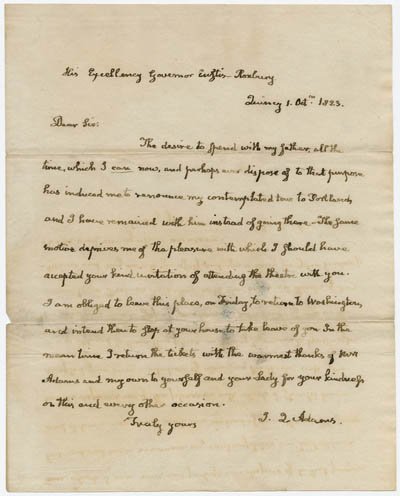
Letter from John Quincy Adams to William Eustis, 1 October 1823
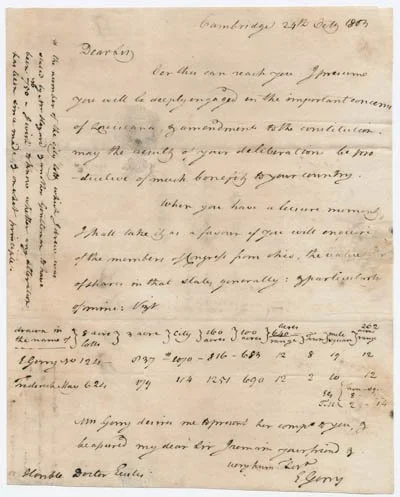
Letter from Elbridge Gerry to William Eustis, 24 October 1803
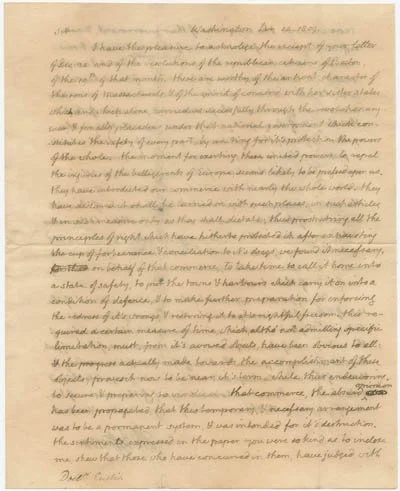
Letter from Thomas Jefferson to William Eustis, 14 January 1809
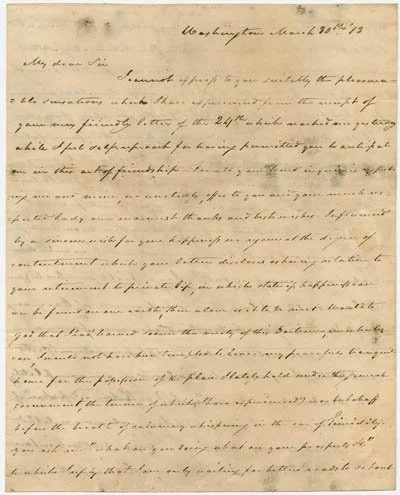
Letter from Paul Hamilton to William Eustis, 30 March 1813
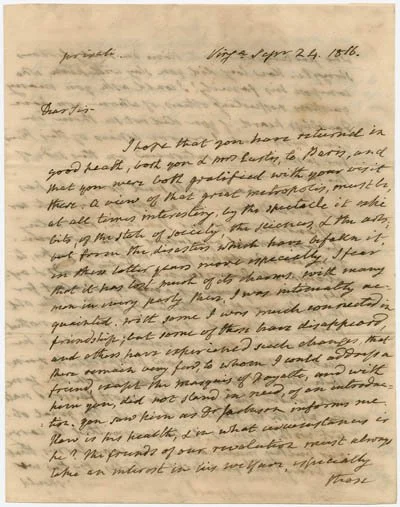
Letter from James Monroe to William Eustis, 24 September 1816
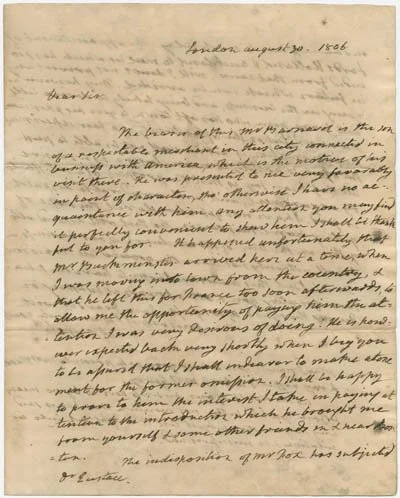
Letter from James Monroe to William Eustis, 30 August 1806
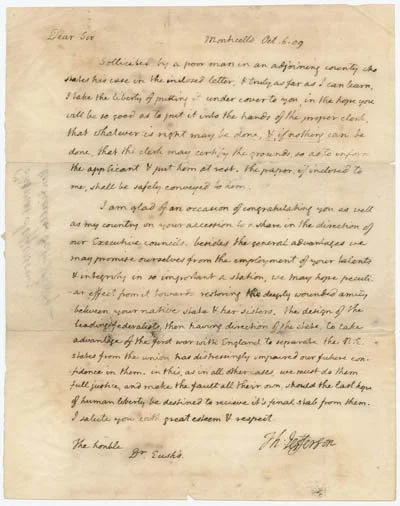
Letter from Thomas Jefferson to William Eustis, 6 October 1809
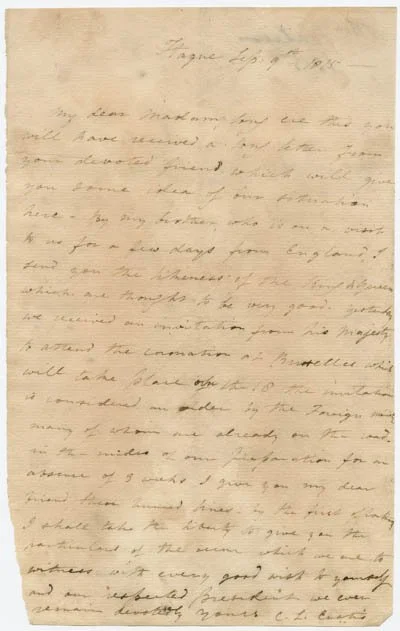
Letter from Caroline Langdon Eustis [Mrs. William] to Dolley Madison, 9 September 1815
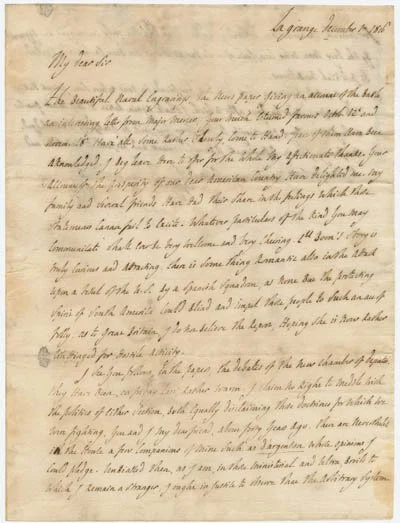
Letter from the Marquis de Lafayette to William Eustis, 1 December 1816
Images is online exhibit are either in the public domain or being used under fair dealing for the purpose of research and are provided solely for the purposes of research, eduction, or private study. The original letters referenced here awere donated to the Massachusetts Historical Society by Olivia Dworkin 1923-2017.
This exhibit was made possible by funding from the late Olivia Dworkin and The Massachusetts Chapter of the Society of the Cincinnati. We were greatly aided in our interpretation by Tamsen George’s Allegiance: The Life and Times of William Eustis, pubished in 2021 and available for purchase at the Shirley-Eustis House or on our website.